 How my food lives
Fish · The final journey
How long are live fish transported?
Usual: no hour limit for live fish. Level at the front: Wild catch, no label and MSC. Weakest: 4 standards, among them Farmed fish (legal minimum) and ASC (aquaculture).
Why it is like this
Regulation 1/2005 sets hours for cattle, pigs and other named animals, not for fish. Organic law says only that the transport of aquaculture animals must be kept to a minimum. Wild fish do not travel alive: they die in the net or on board.
What the labels say
| Standard | Level |
|---|---|
| Wild catch, no label | 4 At home on the farm or pasture, with no journey |
| MSC | 4 At home on the farm or pasture, with no journey |
| Farmed fish (legal minimum) | 1 After a long journey, perhaps a whole day, at a large slaughterhouse |
| ASC (aquaculture) | 1 After a long journey, perhaps a whole day, at a large slaughterhouse |
| AB aquaculture (EU organic fish) | 1 After a long journey, perhaps a whole day, at a large slaughterhouse |
| Label Rouge fish (salmon, trout, sea bass, bream) | 1 After a long journey, perhaps a whole day, at a large slaughterhouse |
How we read the levels
- After a long journey, perhaps a whole day, at a large slaughterhouse.
- After a journey of a few hours, at a slaughterhouse.
- After a short journey, at a slaughterhouse nearby.
- At home on the farm or pasture, with no journey.
Level 1: After a long journey, perhaps a whole day, at a large slaughterhouse.
Applies to: Farmed fish (legal minimum), ASC (aquaculture), AB aquaculture (EU organic fish) and Label Rouge fish (salmon, trout, sea bass, bream)
Live fish may be transported without an hour limit. Regulation 1/2005 has no hour limits for fish, and AB only says that transport must be kept to a minimum. ASC sets no hour limit for live fish. The Label Rouge fish rule books were not read, so that row takes the legal floor.
Regulation (EC) 1/2005, Annex I Chapter V sets hours for cattle, pigs, horses and other named animals, but not for fish. Regulation (EU) 2018/848 Annex II Part III 3.1.6.6: appropriate measures are taken to keep the duration of the transport of aquaculture animals to a minimum, with no number of hours. The ASC Farm Standard watches water quality during live transport but sets no number of hours, so ASC salmon stays at level 1. Label Rouge fish take the legal value as their floor ('at least the law').
Level 4: At home on the farm or pasture, with no journey.
Applies to: Wild catch, no label and MSC
No transport of live fish: the wild fish dies in the net or on board. It reaches land dead or dying.
Biology, not a written rule. MSC has no rule on this either, as far as we know.
What stays open
ASC and Label Rouge fish: no transport rule read, so both rows are scored at the legal floor. AB gives no number of hours.
Videos
Note: this video shows images some people find distressing.
Fish: how are trout farmed in France?L214 Éthique & AnimauxL214 investigation of trout farming and slaughter at Aqualande. (film from an advocacy group)
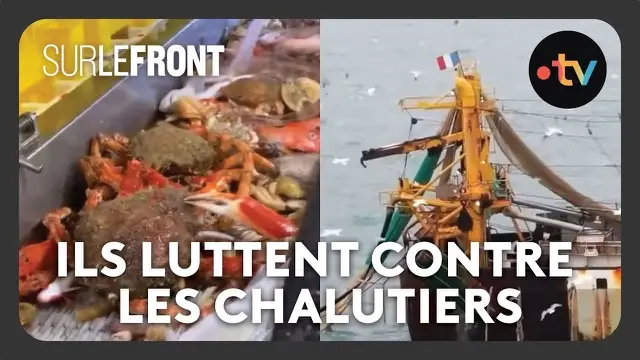 The dangers of intensive fishing: Sur le front with Hugo ClémentSur le front avec Hugo Clément -France Télévisions
Sur le front: the dangers of intensive fishing, including bluefin tuna.
Further reading
- EUR-Lex: Regulation (EC) 1/2005, animal transport (Legal text)
- EUR-Lex: Regulation (EU) 2018/848, organic production (Legal text)
Sources
- Everything on Fish
- How old are fish when they are killed for food?
- Do farmed fish ever see their parents?
- How much space do farmed fish have?
- What does a farmed fish's habitat look like?
- Do farmed fish live outdoors?
- What treatments do farmed fish get?
- How are fish killed?
- Label: Wild-caught fish without a label
- Label: MSC (wild fish)
- Label: Legal minimum (EU and French law)
- Label: ASC (farmed fish)
- Label: AB / EU organic
- Label: Label Rouge
- Legal minimum (EU and French law) vs Label Rouge: Fish
- Legal minimum (EU and French law) vs AB / EU organic: Fish
- Label Rouge vs AB / EU organic: Fish