 How my food lives
Beef · Lifespan
How long do beef bulls live?
Could live 15 to 20 years. Is slaughtered as a fattening bull at about 18 to 20 months. The same for every label: According to AMA a fattening bull is about 18 to 20 months old at slaughter.
Why it is like this
According to AMA a fattening bull is about 18 to 20 months old at slaughter, culled dairy cows are on average about six and a half years old (ZuchtData). The AMA cattle guideline only requires that animals were at least six months on an AMA farm before slaughter, and names a minimum age only for rosé veal (six months). Even for pasture cattle we found no statement that they are allowed to grow old. The ages of the animals come from AMA and ZuchtData, the possible lifespan from animal welfare groups, with no official figure.
What the labels say
How we read the levels
- Until it is big enough to be used. It may still be very young.
- Until it is at least fully grown.
- Until it has lived half of its possible life.
- Until it is old.
- Until it dies of its own accord.
Level 1: Until it is big enough to be used. It may still be very young.
According to AMA a fattening bull is about 18 to 20 months old at slaughter. No Austrian label in our table sets a minimum age.
The AMA guideline for cattle only requires that animals spent at least six months on an AMA farm before slaughter (section 1.6; two months for calves). A minimum slaughter age appears only for "Kalb rosé" (rosé veal): six months (Qplus module, section 7.1). A cow could live 15 to 20 years. The age of fattening bulls comes from the AMA page on beef cattle; we did not check a weight for bulls.
Level 2: Until it is at least fully grown.
Possible on some farms, not guaranteed: Law (Animal Welfare Act, 1st Animal Husbandry Ordinance), AMA-Gütesiegel (base, cattle keeping), AMA-Gütesiegel with module Weidehaltung (pasture keeping), AMA-Gütesiegel with module Mehr Tierwohl (cattle), Fair zum Tier! ALMO beef (REWE, BILLA), Tierwohl verbessert (fattening cattle), Tierwohl kontrolliert 2 (fattening cattle), Tierwohl kontrolliert 3 (fattening cattle, suckler cows), BIO AUSTRIA (cattle), Prüf Nach! (Zurück zum Ursprung, cattle), Demeter (cattle) and Organic (EU)
The animal is at least adult. This applies to old cows that end up as beef: culled dairy cows, on average about six and a half years old.
Cow meat goes mainly into minced meat and sausage. The figure is the average age at which dairy cows leave the herd in Austria (6.47 years, ZuchtData 2025); we have no separate figure for cows at the slaughterhouse.
What stays open
For BIO AUSTRIA, Fair zum Tier! and the Tierwohl levels there is no rule. Usual: fattening bulls are under two years old, old cows about five (not checked for Austria).
Videos
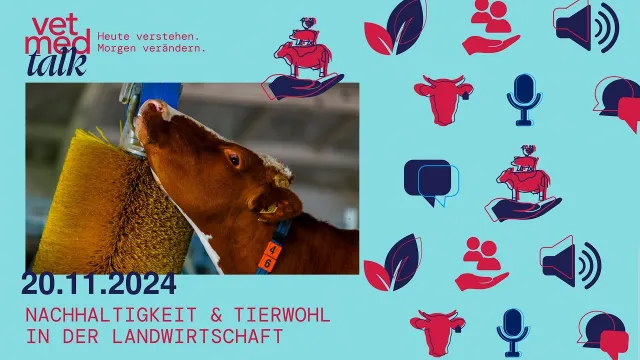 VetmedTalk: sustainability and animal welfare in farmingVetmeduni Austria, 62 min
The University of Veterinary Medicine Vienna presents projects on animal welfare and sustainability in farming. One hour of discussion.
Sources
- Swissveg: life expectancy of farm animals (animal welfare group)
- Vier Pfoten: age of farm animals (animal welfare group)
- foodwatch 2023: animal health analysis (dairy cow 5.4 years, Germany)
- 1st Animal Husbandry Ordinance (Austria), annexes 2, 5, 6, legal database, version of 21 Nov 2026
- AMA-Gütesiegel guideline for cattle (calves, fattening, suckler cows), version 2021/1
- ZuchtData (Rinderzucht Austria): annual report 2025, sections milk and fitness
- BIO AUSTRIA production guidelines, November 2025
- Fair zum Tier! criteria (long version), version 2026_L04, REWE International
- Everything on Beef
- How long do calves stay with their mother?
- How much space does a fattening bull have?
- What do beef cattle lie on?
- Do beef cattle get out to pasture?
- Are cattle dehorned?
- How long are cattle transported to slaughter?
- How are cattle slaughtered?
- Label: Legal minimum
- Label: AMA-Gütesiegel
- Label: Fair zum Tier!
- Label: Tierwohl verbessert
- Label: Tierwohl kontrolliert
- Label: BIO AUSTRIA
- Label: Prüf Nach!
- Label: Demeter
- Label: Organic (EU)
- BIO AUSTRIA vs Organic (EU): Beef
- AMA-Gütesiegel vs Organic (EU): Beef
- Tierwohl verbessert vs Tierwohl kontrolliert: Beef
- AMA-Gütesiegel vs Fair zum Tier!: Beef