 How my food lives
Beef · The final journey
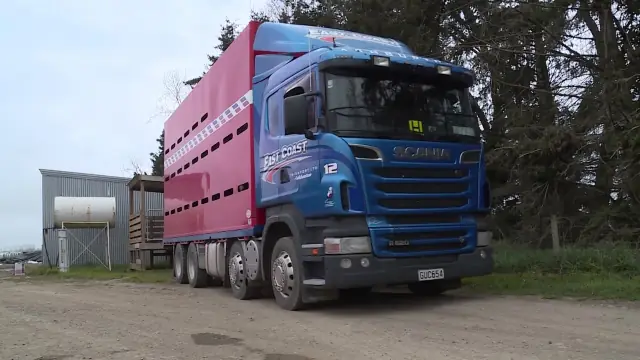
How long are cattle transported to slaughter?
A young calf may travel at most 12 hours. Adult cattle have no limit. Level at the front: Certified organic (BioGro standard) and Certified organic (AsureQuality standard). Weakest: Legal minimum (Sheep and Beef Cattle Code 2018, Regulations 2018).
Why it is like this
Regulation 34 caps transit for a young calf at 12 hours. BioGro says slaughter journeys should normally take at most 8 hours, and names at most 12 hours without water and 24 hours without food for adult cattle. The Transport Code sets no limit for adult cattle. AsureQuality organic caps the trip at 8 hours, longer with its permission when no organic slaughterhouse is near.
What the labels say
| Standard | Level |
|---|---|
| Legal minimum (Sheep and Beef Cattle Code 2018, Regulations 2018) | 1 After a long journey, perhaps a whole day, at a large slaughterhouse |
| Certified organic (BioGro standard) | 1-2 level 1 guaranteed (After a long journey, perhaps a whole day, at a large slaughterhouse); up to level 2 depending on the farm |
| Certified organic (AsureQuality standard) | 1-2 level 1 guaranteed (After a long journey, perhaps a whole day, at a large slaughterhouse); up to level 2 depending on the farm |
How we read the levels
- After a long journey, perhaps a whole day, at a large slaughterhouse.
- After a journey of a few hours, at a slaughterhouse.
- After a short journey, at a slaughterhouse nearby.
- At home on the farm or pasture, with no journey.
Level 1: After a long journey, perhaps a whole day, at a large slaughterhouse.
Applies to: Legal minimum (Sheep and Beef Cattle Code 2018, Regulations 2018), Certified organic (BioGro standard) and Certified organic (AsureQuality standard)
A trip of hours up to a day. No law caps it for adult cattle, so the legal minimum sits here. Regulation 34 limits a young calf to 12 hours in transit.
The Code of Welfare: Transport within New Zealand sets no hours for adult cattle (Minimum Standards 4 and 10). As advice only, it says grown animals should be unloaded to rest at least every 24 hours. The Commercial Slaughter Code limits waiting at the plant to 48 hours (Minimum Standard 4 k and l).
Level 2: After a journey of a few hours, at a slaughterhouse.
Possible on some farms, not guaranteed: Certified organic (BioGro standard) and Certified organic (AsureQuality standard)
A trip of a few hours. BioGro says slaughter journeys should normally take at most 8 hours, longer with approval. AsureQuality organic caps the trip to slaughter at 8 hours but may allow more when no organic slaughterhouse is within reach (5.12.2), so it sits between 1 and 2.
Module 5 section 4.8.1 f ii. For adult cattle BioGro also names at most 12 hours without water and 24 hours without food.
What stays open
The legal minimum sets no limit on trip length for adult cattle.
Videos
 How to check a calf is fit for transportDairyNZ, 4 min
Industry body DairyNZ explains how farmers check that a calf is fit to travel. Industry view.
Sources
- Code of Welfare: Transport within New Zealand, 1 October 2018
- Animal Welfare (Care and Procedures) Regulations 2018
- Code of Welfare: Commercial Slaughter, 1 October 2018, amended to 30 June 2026
- BioGro Organic Standards, Module 5 Livestock Production Standard (reviewed 2026)
- AsureQuality Organic Standard, version 8, June 2020
- Everything on Beef
- How long do beef bulls live?
- How long do calves stay with their mother?
- How much space does a fattening bull have?
- What do beef cattle lie on?
- Do beef cattle get out to pasture?
- Are cattle dehorned?
- How are cattle slaughtered?
- Label: Legal minimum and codes of welfare
- Label: BioGro certified organic
- Label: AsureQuality organic
- Legal minimum and codes of welfare vs BioGro certified organic: Beef
- Legal minimum and codes of welfare vs AsureQuality organic: Beef
- BioGro certified organic vs AsureQuality organic: Beef